Thursday, May 10, 2018

Flipping the classroom???


Something that would really interest me and would really help me in writing this blog is something about YOU, the reader. More specifically, the age demographics of the readers on this blog. However, I am unable to see this and I am going to proceed with an assumption that there are readers on this blog who grew up in the pre-"technology in school" era. As a graduate student in a school with extensive use of educational technology, my goal in this blog is to share with others who did not have this experience growing up. 

Below is a video about the theory of continental shift. This is something students nowadays typically receive as educational tools from teachers, especially for homework. Sometimes the teachers make the videos personally for use as a classroom tool and sometimes they are shared by other online users. An additional item that usually comes with these videos is a worksheet with questions to guide students towards key points in the video. As previously stated, my goal in this blog is to share an experience with those who did not experience this growing up. So I encourage the reader to watch the brief 3 minute video, an attempt to complete a short video guide I have created below. Please feel free to pause the video at anytime or rewind when a reiteration is needed.

                                        Source: Sierra Adler at the Centre for Communication, University of Otago, New Zealand   © 2018  SIERRA ADLER   ALL RIGHTS RESERVED
                                 

Theory of Continental Shift Video Guide
***To view the answer, please highlight the text in between the arrows. The answer is hidden under the font color.***

1) What is Gondwanaland?

Answer:---> A super-continent that existed about 400 million years ago. <---

2) What did Abraham Orthelius notice in 1587 and then proceeded to suggest?

Answer:---> The shapes of the current continents today fit together and that the continents drifted apart from one another<---

3) Who suggested the theory of plate tectonics?

Answer:---> Jack Oliver<---

4) In what way was it described for tectonic plates fitting to one another?
Answer:---> Like puzzle pieces <---

5) How does magma move?
Answer:--->  By convection (heat rises) <---

6) What shifts the tectonic plates?
Answer:---> Convection currents in the mantle of the earth which are heated by the core of the earth <---

7) What is it called when plates move away from one another? When they move together?
Answer:---> Respectively, Divergent and convergent boundary <---

8) How do seafloors spread? What makes mountains? What causes earthquakes?
Answer:---> Divergent boundaries spread seafloors. Mountains are created by convergent boundaries. Earthquakes are caused by transform boundaries <---

9) How fast are continents moving today?
Answer:---> As fast as our fingernails are growing <---

10) Will earth look the same in another 400 million years?
Answer:---> It will once again be completely different <---

Thank you for completing the video guide. This is something students today receive on a regular basis. These videos along with a video guide for homework are a wonderful educational tool because of the video's ability to be paused and rewound, something that is not always possible in a classroom setting. It ensures that a student is able to "catch" every single point of the "virtual" lesson.

In my senior year of high school, I had a wonderful Calculus teacher by the name of Dr. Fishman. Likewise, he frequently made excellent math tutorials on YouTube for his students. He called his theory behind doing this "flipping the classroom". Instead of instruction during class time, class time is used for exercise problems or something like homework and the actual instruction was done prior to the class by a YouTube video this fabulous teacher created for his students. In addition, to ensure his students attentively watched his YouTube videos at home, he would create a video guide that we would have to complete as a small quiz for a small grade during the beginning of class. This method was extremely effective because we had the ability to review the instruction from the video as many times as we desired.

In conclusion, I hope you enjoyed this small trial that I made for you. It is something students nowadays are using and it is innovative and effective. Just food for thought for educators on this blog.

Alvin Cheung

Monday, April 30, 2018

Learn a New Language for Free


Learning a language can always be intimidating. However, with this online program it is simplified for the user. The website is  user friendly. You can set a time to study the language if you have a busy life. Each click of the mouse gets you closer to speaking a new language.

Thank you Bill Martin for sharing this article.

To read more check out this link https://www.duolingo.com

By Bill Martin

Friday, April 20, 2018

Out with the lectures and boring homeworks! In with the games!

Be honest and answer this question: As a child, did you always do your homework every time it was assigned in a timely, and concise manner? If you answered “yes”, props to you or shame on you for lying. If you answered “no”, ask yourself, why did you fail to complete the assignment? My  answer to this question is that the assignment simply did not interest me, even though I had enough free time at home to complete the task. I opted to do other things that intrigued me more. For example, video games or playing outside. 

Are children lazy?

First of all, I would like to clarify something. KIDS ARE NOT LAZY. Even though many parents or teachers believe this, it is simply miles from the truth. For god’s sake, most children can’t sit still for more than 15 minutes and they need to be constantly moving or be stimulated by something. That’s why at dinner tables, you see many children looking down at their electronic devices and ignoring everybody around them. They simply are not intrigued by adult conversations and are opting to do something else with their time.  The Merriam-Webster definition for the word lazy is, “disinclined to activity or exertion”. As proven by the previous point regarding electronic devices, children aren’t disinclined to activity, they’re just disinclined to the traditional types of homework, and they simply choose to partake in other activities. Rather than blaming a child for not doing his/her homework, and then saying, “Oh yeah, it’s your loss if you don’t do your homework, and it is not my problem”, educators seriously have to reflect on reasons why their students failed to complete the assignment other than laziness. 

If we can’t call children lazy, are we just gonna let them game all day long and call it an education!?!

Absolutely not. Educators should definitely mix in some interesting/fun assignments once in a while to keep students “hooked”. Have you ever asked a child with no educational background whatsoever to fix your electronic device? If you haven’t, I’ve certainly seen many children as well as myself been asked.  Fixing a computer is really like putting a puzzle together. Diagnose the problem, then find a solution. Surprisingly, many children can complete this task better than a college graduate. Since children nowadays are so naturally gifted with technology, we should put their talents to good use, especially when it comes to education. According to the Scientific America article, “Fact or Fiction?: Video Games Are the Future of Education”, “Video games are playing an increasing role in school curricula as teachers seek to deliver core lessons such as math and reading—not to mention new skills such as computer programming—in a format that holds their students’ interests”. The article also adds that, “games are a powerful learning tool when combined with other exploratory, hands-on activities and ongoing instruction from a teacher acting more as a coach than a lecturer…”. In my opinion, the schools that are willing to integrate technology/video games into their curriculum receive a standing ovation. Teachers and school administrators in this day and age  did not grow up with the kind of technology children have nowadays. It definitely requires courage for the adults to place trust into something that is unfamiliar and unorthodox in the education system. A school which is innovative opens up many more opportunities for its students. It is undeniable that technology is becoming a greater part of society as we speak, and for schools to embrace this change, their students will become better prepared to enter the workforce. 

An Example?
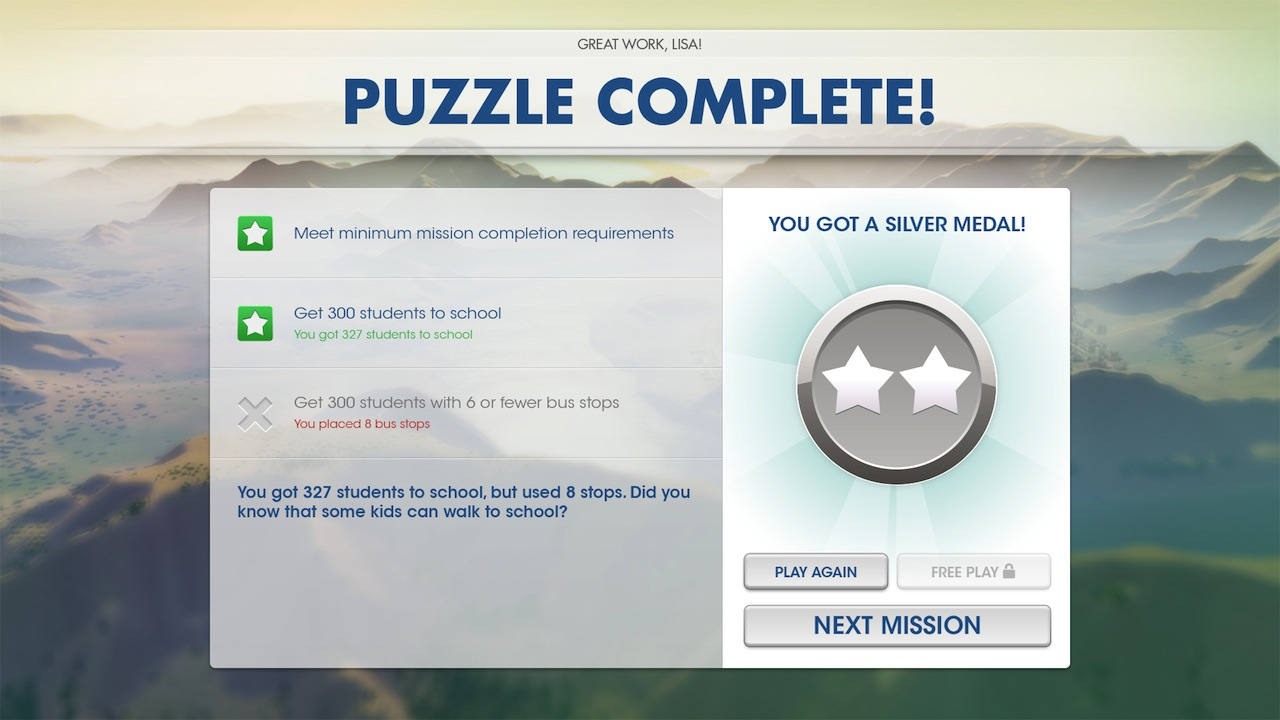
SimCityEDU:


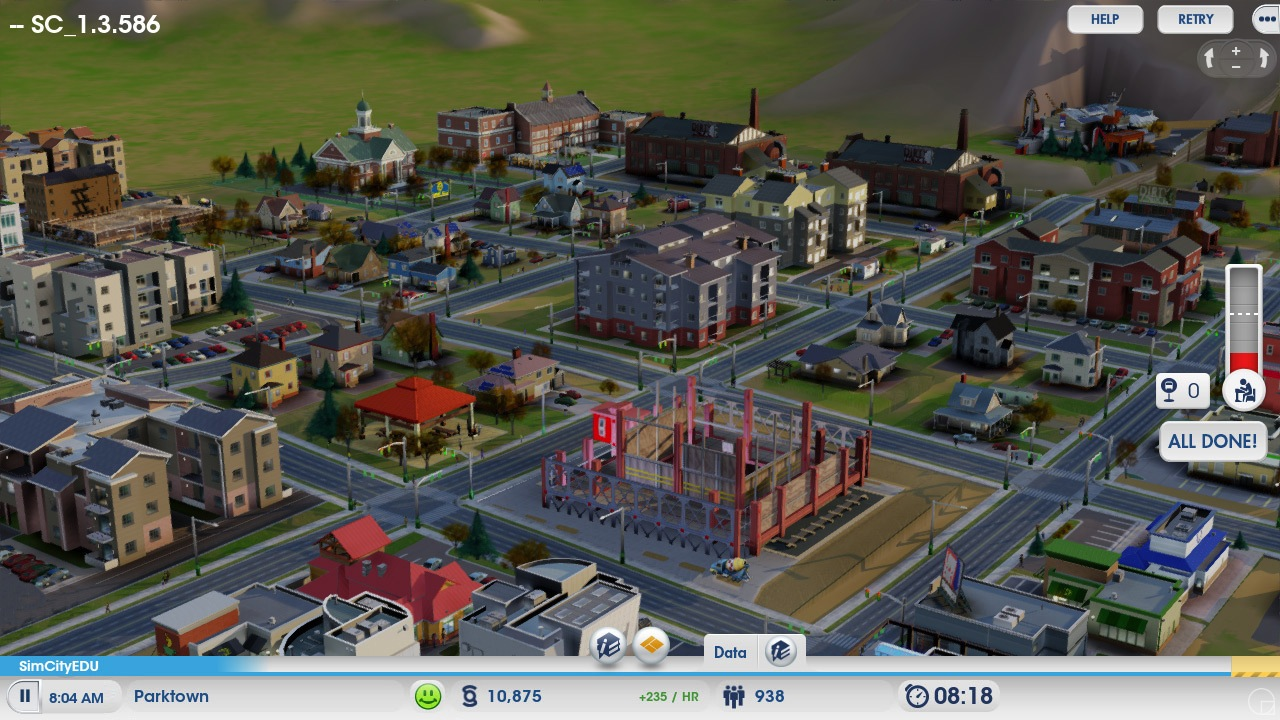
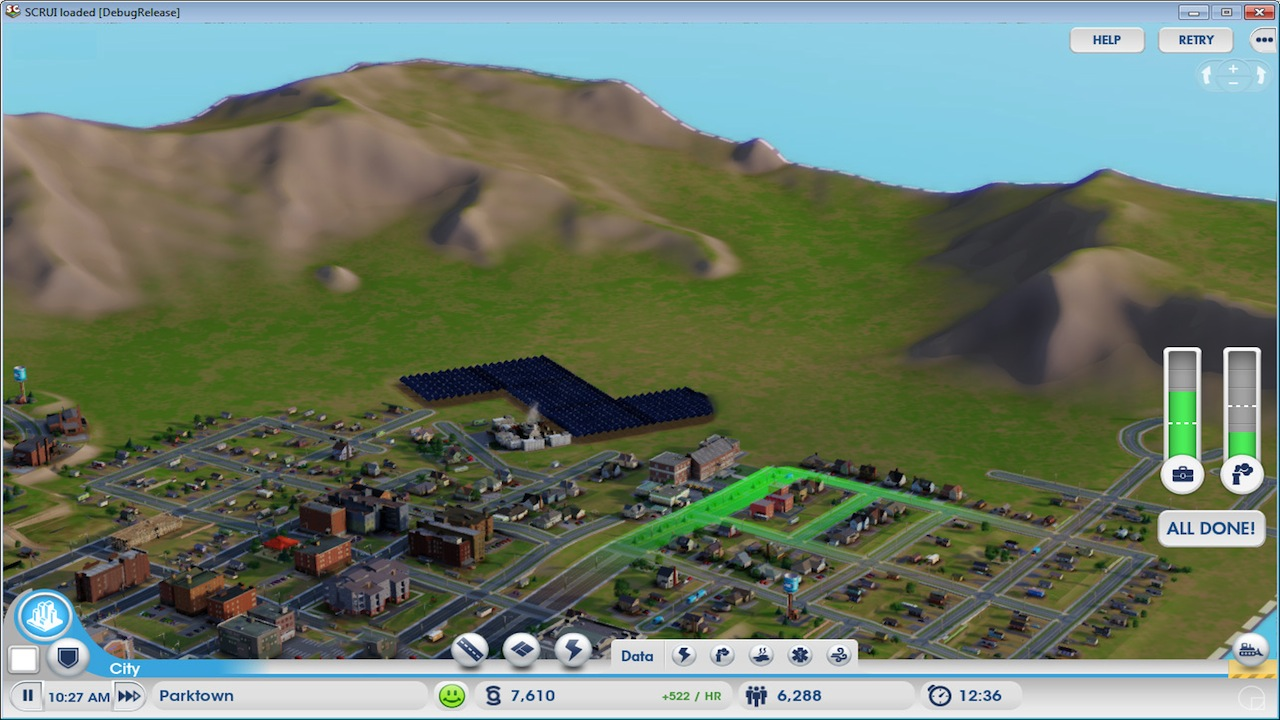
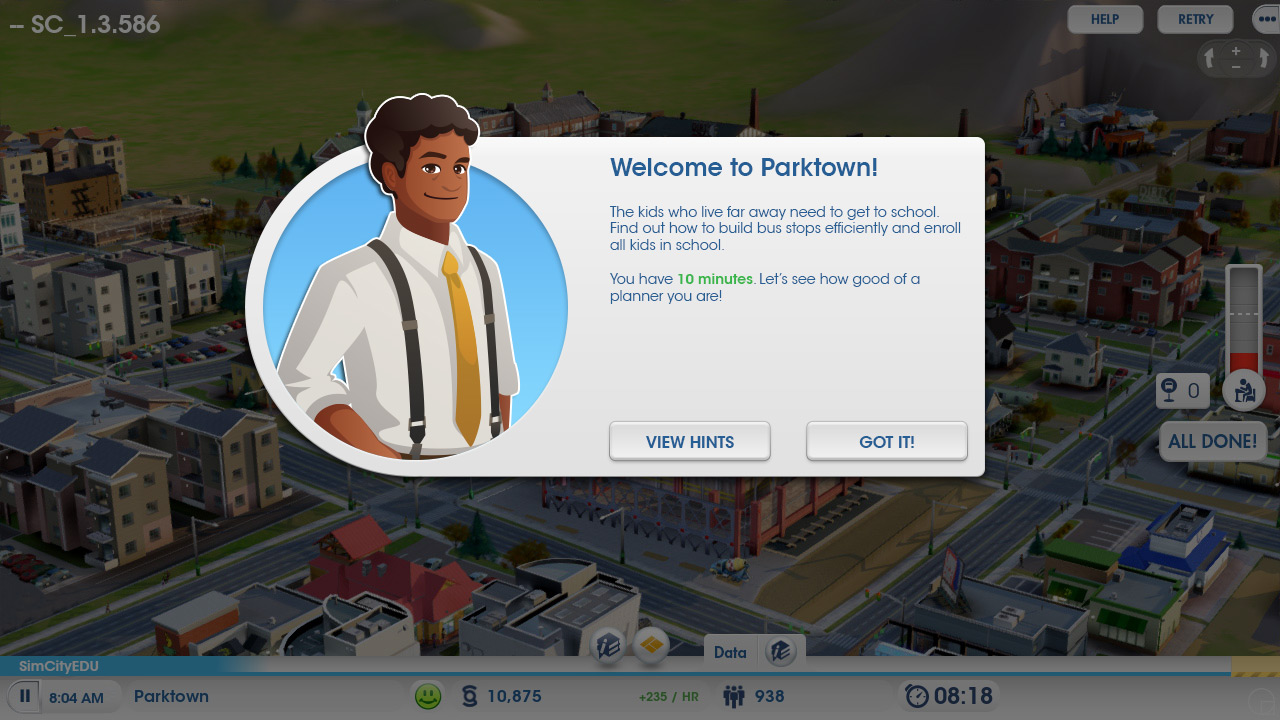
There certainly is an aesthetic element to this game and the odds are it will attract a few curious children to test it out. This game is simply a puzzle designed for children to solve some “real-life” problems. Sometimes the process of learning is actually more important than the subject matter, and video games can certainly aid with this process. 

To sum it all up, children are interested in simplicity and if the assignment is fun and intriguing they will focus on the assignment. Embrace but not evade technology. 

Tuesday, April 10, 2018

A 21- year old Swedish AI Prodigy wants to Revolutionize the $6 Trillion Education Industry


  • Sana Labs is an edtech startup founded by 21-year old Joel Hellermark.
  • It provides AI platform that individualizes a student’s learning in subjects ranging from language to maths.
  • Applying AI to education has so far proved difficult, and Sana Labs hopes its scalable platform will change that.
  • Even Mark Zuckerberg and Tim Cook have shown interest towards the Swedish startup, which uses AlphaGo-like technology to boost student performance.


TO READ MORE VIEW THE LINK BELOW:


https://www.businessinsider.com.au/a-21-year-old-ai-prodigy-sweden-sana-labs-wants-to-revolutionize-the-5-trillion-education-industry-heres-why-mark-zuckerberg-and-tim-cook-seem-convinced-2018-3


SHARED BY MICHELE STRAUBE

Monday, April 2, 2018

Technology education for the masses could be Apple’s next big thing


Technology education for the masses could be Apple’s next big thing
Dan Moren wonders if the company should take a more holistic approach to teaching technology.

<https://www.macworld.com/article/3263402/techology-business/technology-education-for-the-masses-could-be-apples-next-big-thing.html>


By: Bill Martin

Tuesday, March 20, 2018

The Future of Medical Care


Yes, virtual medicine is here.  It’s faster, available anywhere, and works well already at “Mercy Virtual":


Shared by: Michele Straube

Friday, March 9, 2018

The Future of Learning


The long list of objections to online learning is as such:   It’s dull, boring, too hard, not challenging, too simple, too confusing.  You’ll need a computer, tablet, or smartphone, and if you have got that, you’ll need WI-FI or a cable connection.  Also, isn't “real” learning  a “face-to-face” teaching experience?  Not to mention if you use an unconventional method, like online learning, you’d be all alone, unable to interact with your peers, as well as the teacher.

Any form of progress has always been a “new” way of dealing with things, say for example, changing from riding horses to riding in an automobile, or writing on papyrus with a feather to writing on paper with a pen, and now one can even dictate to Siri, and this machine will send the message out via email.  So …

Since we have the use of computers, tablets, iPhones, WI-FI and cable, we are able to communicate and interact electronically. This not only allows us to do so faster, but also more intensely, more direct, allowing for easy long-distance interplay and action.  Also, this includes learning.

Of Course we’ll need to adjust to these new ways, learn the basics of how to function on these new systems.  But, from what I see around the world, this is not difficult at all for most people but rather a breeze, maybe even fun.

Actually, I think that the age of learning electronically almost anything, anywhere, at any time of the user’s choice, has only just begun.  Anyone can search for and find suitable subject matters to study on the web.  When a student searches “ONLINE LEARNING” in Google, 354,000,000 results will come up in 0.48 seconds.  Thus, there is a lot more to learn online than anyone would be able to even view.  So, of course, the search would need to be specified.  I can assure you, “search and you shall find.”  You can begin your search right here, on this blogspot site, if you wish.  Enjoy!

Yet I think that the future of ONLINE Learning will become even more exciting, particularly with the use of VR = Virtual Reality.  Which means no more “book-learning” by studying text and more text, but by essentially watching movies and even being part of whatever subject matter is being presented.

Here are a few examples of what’s going on in this regard already:

How Virtual Reality is helping train new teachers:

Immerse Virtual Reality: Online Education for the next generation:

Virtual Reality and Learning: The Newest Landscape for Higher Education:

By: Win Straube